# How to Use AI Voice Agents for Better Customer Onboarding?
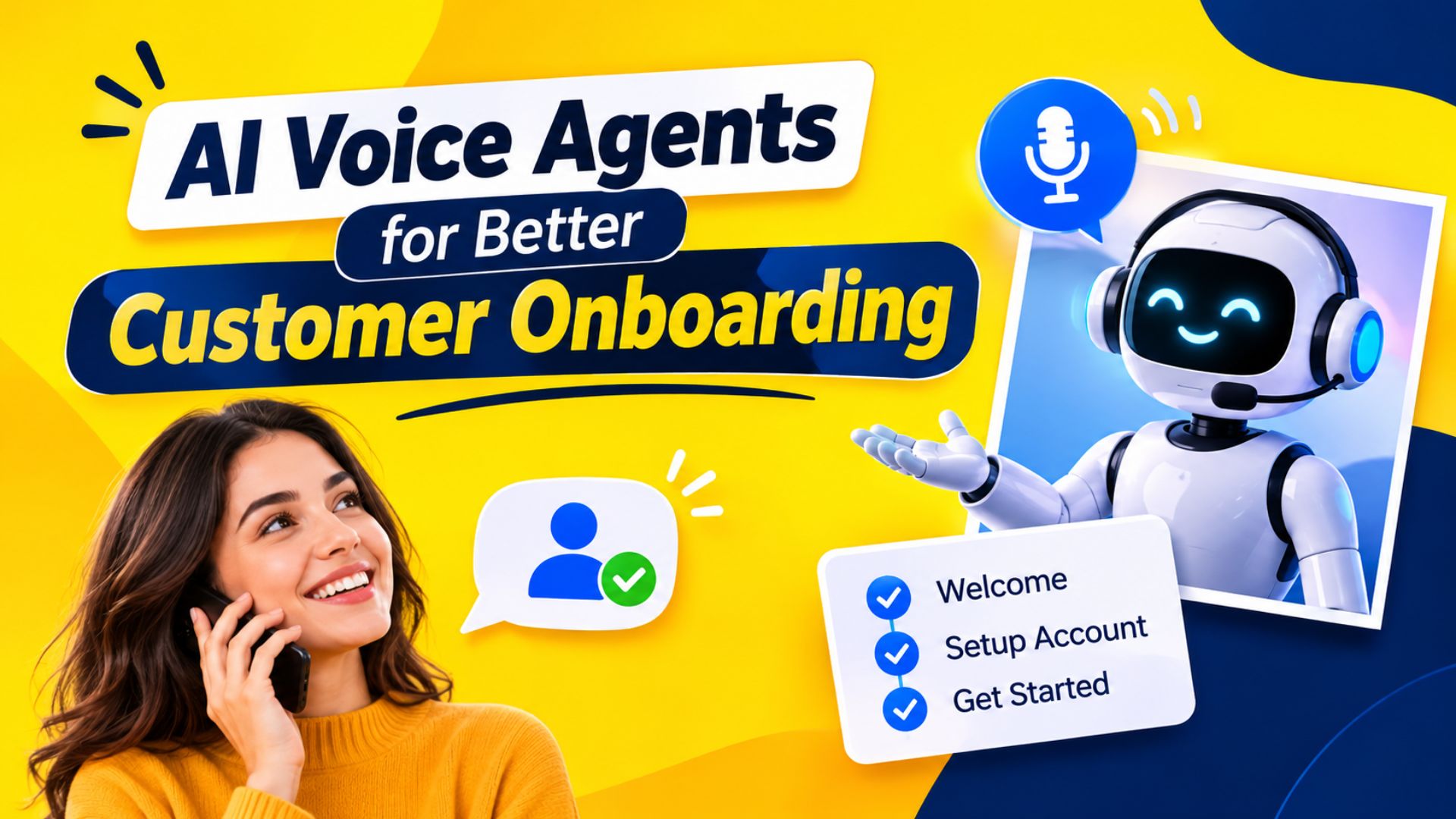
How can businesses make the first interaction with a new customer faster, easier, and more personalized? A positive first experience plays an important role in building trust and encouraging long-term relationships. However, managing welcome calls, answering repeated questions, collecting customer information, and guiding new users through different processes can become time-consuming for support and sales teams. This is where AI voice agents can make a difference.
AI voice agents use artificial intelligence, natural language processing, and speech recognition to communicate with customers through natural-sounding conversations. They can welcome new customers, explain products or services, answer common questions, schedule appointments, and provide step-by-step assistance without requiring constant human involvement.
Businesses can use this technology to simplify ***[Customer Onboarding](https://callified.ai/blog/customer-onboarding-process/)***, reduce manual workloads, and create a consistent experience from the very first interaction. By combining automation with personalized communication, companies can help customers get started with greater confidence.
**What Are AI Voice Agents and How Do They Work?**
AI voice agents are intelligent virtual assistants that communicate with customers through spoken conversations. Unlike traditional automated phone systems that rely on fixed menus and keypad inputs, these agents understand spoken language and respond according to the context of a conversation.
They typically work through four essential technologies:
* Speech Recognition: Converts spoken words into text so the system can understand customer requests.
* Natural Language Processing: Identifies customer intent and interprets the meaning behind questions.
* AI-Powered Responses: Generates relevant answers based on available business information and conversation context.
* Text-to-Speech Technology: Converts generated responses into natural-sounding speech.
These technologies allow businesses to automate routine conversations while maintaining a more interactive and approachable communication experience.
**7 Effective Ways to Use AI Voice Agents for Better Customer Onboarding**
**1. Automate Welcome and Introduction Calls**
The first conversation can influence how customers perceive a business. AI voice agents can automatically contact new customers after registration, subscription, or purchase.
During these calls, they can:
* Welcome customers and introduce the company.
* Confirm registration or purchase details.
* Explain what happens next.
* Share important account information.
* Guide customers toward their next steps.
Automated welcome calls ensure that customers receive timely communication without waiting for an available representative.
**2. Provide Personalized Product and Service Guidance**
Every customer has different expectations, requirements, and levels of familiarity with a product. AI voice agents can use available customer information to deliver relevant guidance instead of providing the same generic introduction to everyone.
For example, a software company can use voice agents to explain account setup, demonstrate important features through guided instructions, and recommend relevant resources based on the customer's selected plan.
This approach makes interactions more useful and helps customers understand how to get value from their purchases.
**3. Answer Frequently Asked Questions Automatically**

New customers often ask similar questions about pricing, account access, payment procedures, product features, and service availability. Handling every question manually can increase the workload for support teams.
AI voice agents can answer frequently asked questions instantly using approved business information. They can also provide consistent responses across different customer interactions.
Businesses can strengthen this process by integrating voice automation with ***[customer service AI](https://callified.ai/blog/customer-service-ai/)*** solutions, allowing customer-facing teams to manage conversations more efficiently and maintain better communication throughout the customer journey.
**4. Simplify Account Setup and Verification**
Account creation and verification can sometimes feel complicated, especially when customers need to complete several steps.
AI voice agents can simplify these processes by guiding customers through instructions, collecting required information, confirming details, and explaining verification requirements.
For example, an agent can remind a customer to complete profile information, explain how to activate an account, or provide instructions for setting up essential features.
Businesses should ensure that sensitive information is handled through secure, approved verification channels rather than unnecessarily collecting confidential details during calls.
**5. Schedule Follow-Up Calls and Send Reminders**
Not every customer completes the initial setup immediately. Some may need additional assistance, while others might forget important steps.
AI voice agents can schedule follow-up calls and provide timely reminders about pending activities.
Common applications include:
* Reminding customers to complete account registration.
* Scheduling product demonstrations.
* Following up on incomplete applications.
* Reminding users about upcoming appointments.
* Checking whether customers need additional assistance.
These automated follow-ups help businesses maintain communication without requiring employees to manually contact every customer.
**6. Identify Customer Needs and Collect Feedback**
Understanding customer expectations helps businesses improve their services and communication strategies.
AI voice agents can ask structured questions to understand customer requirements, identify potential difficulties, and collect feedback after an initial interaction.
For example, a voice agent can ask whether a customer successfully completed the setup process or needs help understanding a particular feature.
The collected insights can help businesses identify common problems, improve support materials, and make their processes more customer-focused.
**7. Connect Voice Automation With Sales and CRM Systems**
AI voice agents become more valuable when connected with existing business tools. CRM integration allows companies to access relevant customer information, maintain interaction histories, and coordinate follow-up activities.
Businesses can also connect these systems with ***[sales AI tools](https://callzyai.freeforums.net/thread/10/sales-tools-replace-manual-processes)*** to improve lead communication, automate follow-ups, and provide sales representatives with useful customer insights.
For instance, when a new customer expresses interest in an additional service, the voice agent can record that preference and notify the relevant sales representative.
This creates a more connected experience between customer communication, sales activities, and ongoing support.
**Best Practices for Implementing AI Voice Agents**

Successful implementation requires more than simply automating phone calls. Businesses should focus on making every interaction useful, natural, and reliable.
Consider these best practices:
* Define clear objectives: Identify which activities should be automated, such as welcome calls, reminders, or basic support.
* Create natural conversation flows: Use simple language and avoid complicated scripts that make conversations feel robotic.
* Integrate relevant systems: Connect voice agents with CRM platforms and other approved business applications.
* Provide human assistance: Allow customers to speak with a human representative whenever their concerns require personal attention.
* Protect customer information: Follow applicable privacy requirements and use secure data-handling practices.
* Monitor performance: Regularly review call completion rates, customer feedback, and common conversation issues.
Platforms such as Callified AI support businesses exploring AI-powered calling and automated customer communication to improve operational efficiency.
**Key Benefits of AI Voice Agents in Customer Communication**
Implementing AI voice automation can offer several advantages:
* Faster responses: Customers receive immediate assistance instead of waiting for an available employee.
* Greater availability: Automated agents can handle routine conversations beyond standard business hours.
* Reduced workload: Employees can focus on complex customer requirements rather than repetitive calls.
* Consistent communication: Customers receive standardized information across interactions.
* Scalable operations: Businesses can manage increasing call volumes without proportionally increasing their support teams.
* Better customer insights: Automated conversations can help identify common questions and service improvement opportunities.
Also watch this video - ***[Meet Callified AI | Your AI Sales Team That Never Sleeps](https://youtu.be/cQ8QsephGKI?si=zPMCc1XGaWJJboY2)***
**Conclusion**
AI voice agents are changing how businesses communicate with new customers by making interactions faster, more accessible, and easier to manage. From automated welcome calls and account setup guidance to follow-up reminders and feedback collection, they help simplify essential communication activities.
However, successful implementation depends on combining intelligent automation with personalized support, secure information handling, and convenient access to human assistance. Businesses that adopt these practices can create smoother experiences while improving operational efficiency.
Ultimately, using AI voice agents strategically can make ***[Customer Onboarding](https://callified.ai/blog/customer-onboarding-process/)*** more organized, engaging, and convenient, helping businesses build stronger customer relationships from the beginning.
**Frequently Asked Questions (FAQs)**
Q1. How do AI voice agents help new customers?
They welcome customers, answer common questions, explain product features, guide account setup, schedule follow-ups, and provide assistance through automated voice conversations.
Q2. Can AI voice agents replace human customer support representatives?
No. They are best suited for repetitive and routine interactions. Human representatives remain important for complex questions, sensitive situations, and personalized assistance.
Q3. Can AI voice agents make outbound calls automatically?
Yes. Depending on the platform and applicable consent requirements, they can make automated calls for welcome messages, appointment reminders, follow-ups, and other customer communication activities.
Q4. Are AI voice agents suitable for small businesses?
Yes. Small businesses can use them to manage routine calls, provide timely responses, and handle growing communication requirements without building a large support team.
Q5. How can businesses measure the success of AI voice agents?
Businesses can monitor call completion rates, response accuracy, customer satisfaction, successful setup rates, follow-up engagement, and the number of interactions requiring human assistance.