# How Can An AI SEO Content Writer For Marketing Agencies Improve Content Creation Workflows?
[](https://digitalmarketingbuddy.io/pricing)
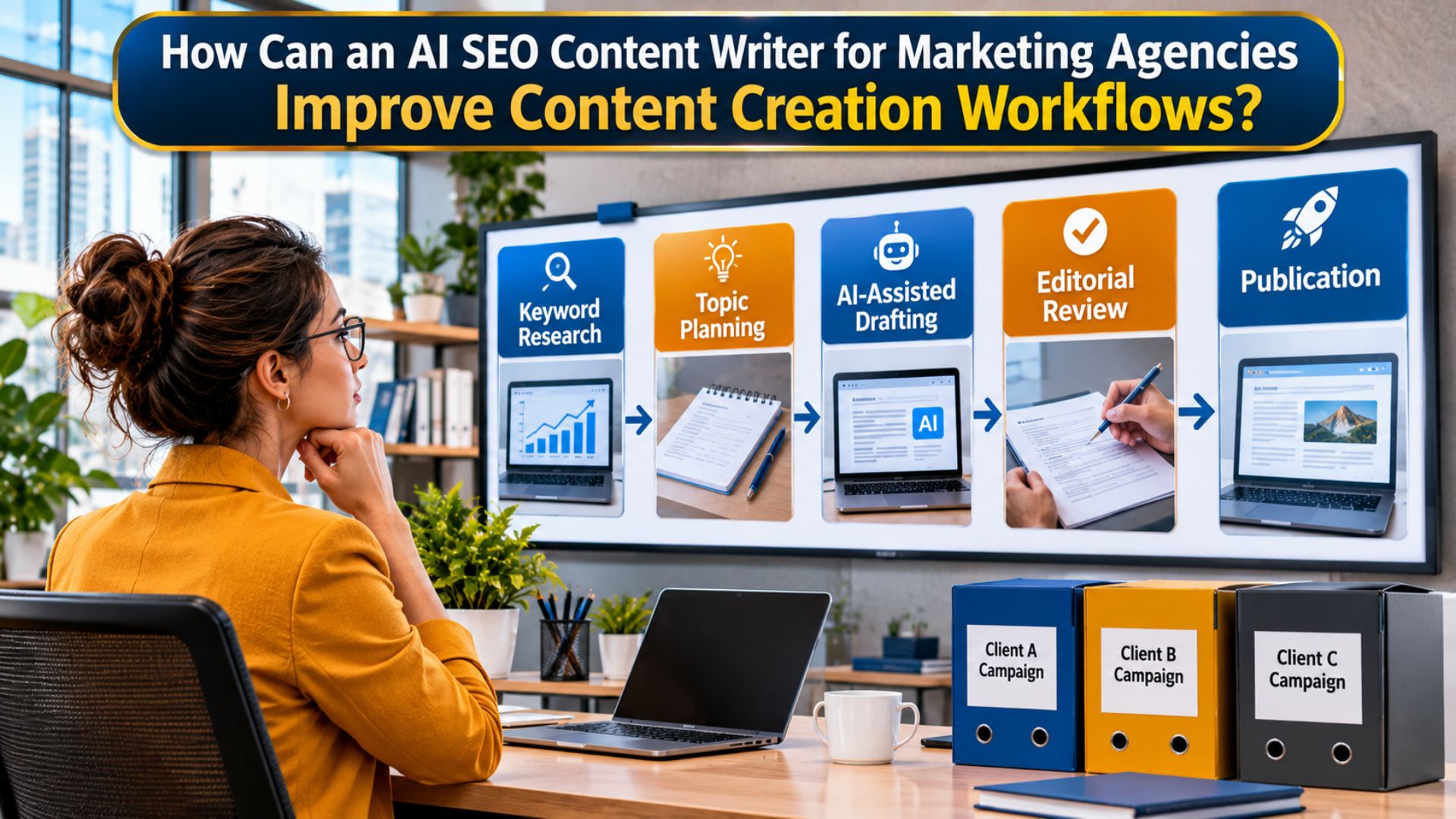
Marketing agencies manage multiple clients, industries, deadlines, and content formats. Producing search-optimized content consistently can become difficult when writers must balance research, originality, keyword strategy, editing, and publishing schedules. An ***[AI SEO content writer for marketing agencies](https://blog.digitalmarketingbuddy.io/ai-content-writing-and-publishing-agency-guide-2026/)*** can support this work by organizing repetitive tasks and helping teams move from ideas to polished drafts more efficiently. It does not replace strategic thinking or editorial judgment. Instead, it gives marketers a way to improve productivity while keeping content aligned with each client's goals.
# Simplifying Research and Content Planning
Strong content begins with understanding the audience and the questions they are searching for. AI writing platforms can help teams explore topic ideas, group related keywords, identify search intent, and create structured outlines. This reduces the time spent moving between research documents and planning tools. Agency strategists can use these insights to build topic clusters around a client's products, services, and expertise. They can also compare content gaps, prioritize pages, and prepare briefs that explain the purpose of each article. A brief gives writers direction before drafting begins and reduces avoidable revisions later. However, research suggestions should be checked against reliable sources, search results, and client knowledge. AI may overlook industry context or suggest topics that do not match the brand's audience. Human review ensures the plan is useful, accurate, and commercially relevant.
# Accelerating Draft Creation Across Client Accounts
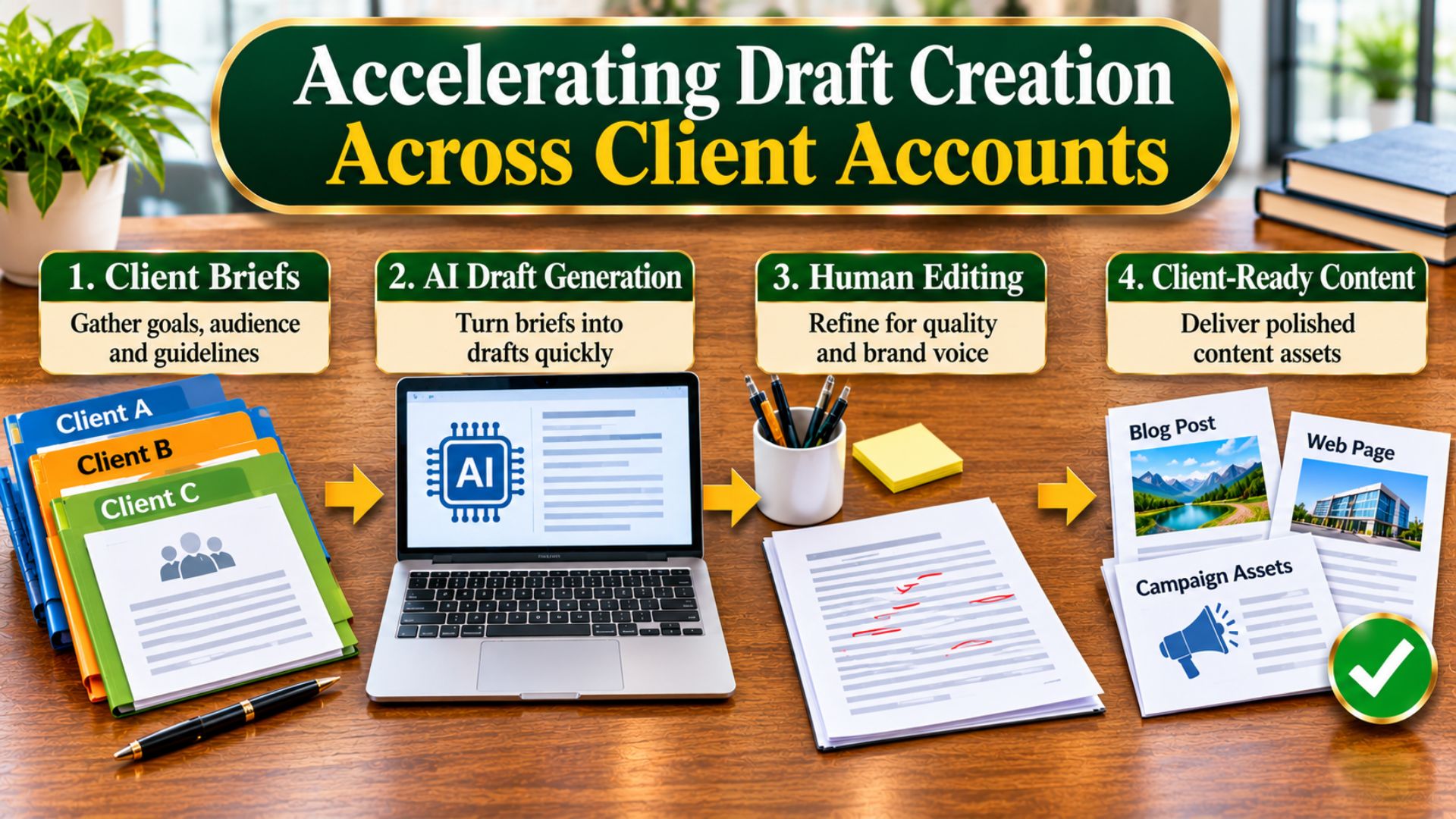
Agencies often produce blogs, landing pages, product descriptions, email content, and service pages for several brands. AI can help generate first drafts, introductions, headings, summaries, and alternative title ideas from an approved brief. Writers can then spend more time improving examples, adding expertise, and shaping a distinctive brand voice. A consistent workflow also makes collaboration easier. Account managers can provide campaign goals and brand guidelines, strategists can supply keywords and outlines, and writers can use these inputs to create drafts. Editors can focus on accuracy, clarity, originality, and tone instead of correcting basic structure in every document.
[](https://digitalmarketingbuddy.io/pricing)
For stores with large product catalogs, an ***[AI SEO content writer for ecommerce](https://blog.digitalmarketingbuddy.io/ai-content-writing-and-publishing-2026-ecommerce-guide/)*** can help organize product descriptions, category copy, and buying guides at scale. Each page still needs accurate specifications, useful benefits, and language that reflects the actual product. Templates should guide consistency without making every description sound identical.
# Improving On-Page SEO and Content Consistency
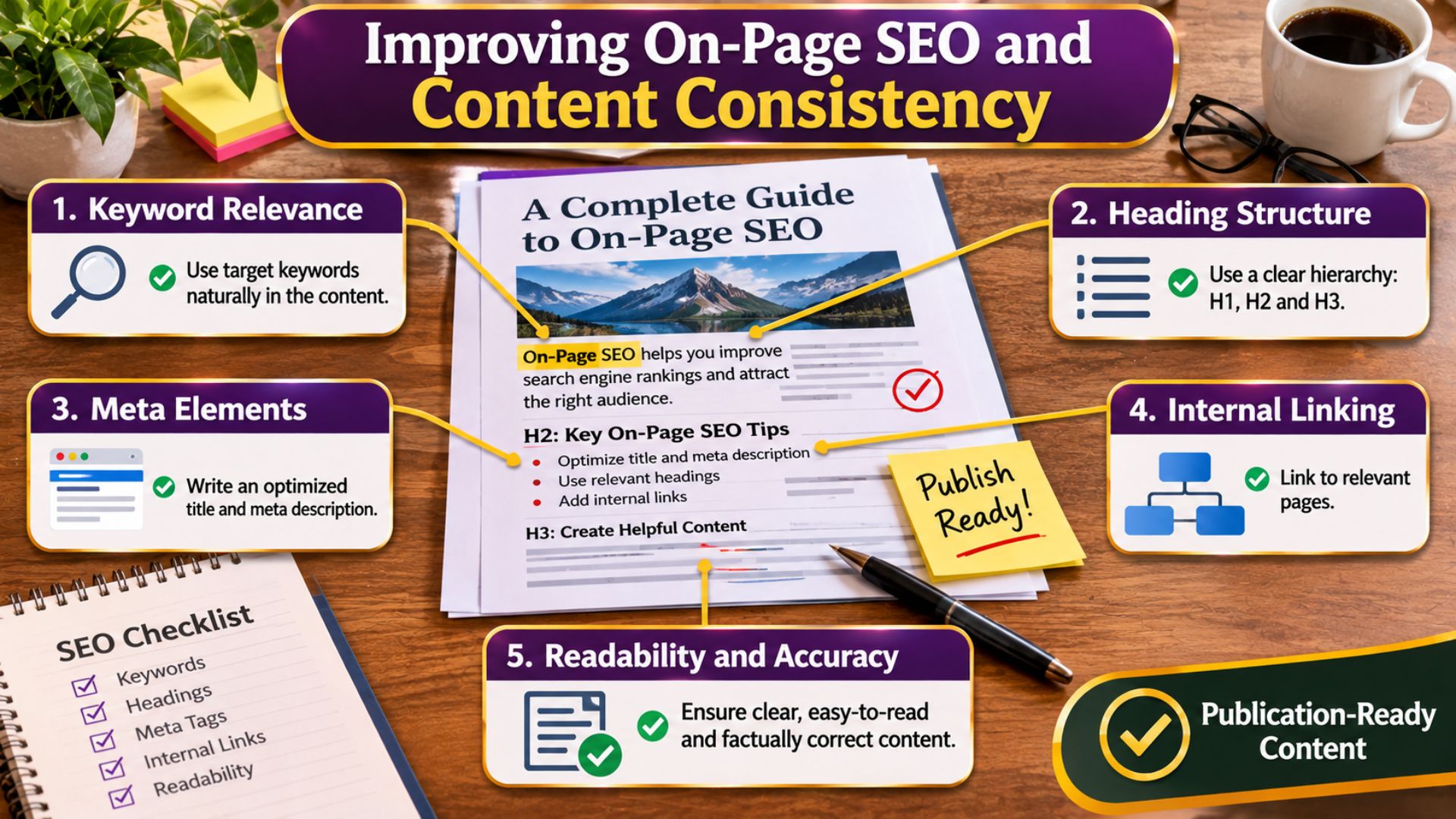
AI tools can assist with on-page optimization by suggesting keyword variations, descriptive headings, meta descriptions, title options, and internal linking opportunities. They can also flag sections that may be difficult to scan or identify places where an explanation needs more detail. These suggestions help teams apply SEO checks across a large content calendar. Agencies should treat optimization as a quality process rather than a keyword insertion exercise. Search terms need to fit naturally, headings should describe the information that follows, and internal links must lead readers to relevant pages. Content should answer the searcher's question clearly before trying to satisfy a checklist.
[](https://digitalmarketingbuddy.io/pricing)
Shared prompts, templates, and editorial standards can make output more consistent across accounts. Yet each client's terminology, audience, expertise, and compliance requirements must remain distinct. Editors should review facts, claims, links, and tone before publication.
# Strengthening Editing, Collaboration, and Delivery
AI can support editing by identifying repeated phrases, awkward sentences, grammar issues, and sections that may need clarification. It can also help transform an article into social captions, email summaries, or shorter campaign assets. This makes it easier for agencies to reuse approved ideas while adapting them to different channels. To avoid confusion, teams should establish clear review stages. A useful process includes brief approval, research validation, drafting, subject-matter review, SEO editing, client approval, and final publishing checks. Project management tools can track ownership and deadlines, while shared documents keep feedback in one place. Agencies should also define where AI assistance is permitted and which information must never be entered into external tools. Confidential client data, unpublished campaigns, and sensitive business information require appropriate safeguards. Clear policies protect trust and reduce the risk of disclosure.
# Conclusion
AI can make agency content operations faster and more organized when it supports a well-designed editorial process. It helps teams plan topics, prepare drafts, apply SEO checks, and adapt content for different channels. However, useful results still depend on accurate research, subject knowledge, brand understanding, and careful editing. An ***[AI SEO content writer for marketing agencies](https://blog.digitalmarketingbuddy.io/ai-content-writing-and-publishing-agency-guide-2026/)*** works best as a capable assistant within a human-led workflow. By combining automation with clear standards and expert review, marketing teams can increase output without sacrificing relevance, originality, or reader value.
# FAQs
**1. How can AI help marketing agencies create SEO content faster?**
AI can speed up topic research, keyword grouping, content outlining, first-draft creation, and basic editing. This allows agency writers to focus more on accuracy, originality, and brand-specific insights.
**2. Can AI-generated content rank on Google?**
AI-assisted content can perform well when it is helpful, original, accurate, and created to satisfy user intent. Rankings depend on content quality and overall SEO factors, not simply whether AI was used.
**3. Should marketing agencies use AI to write entire blog posts?**
Agencies can use AI to prepare drafts, but human editors should verify facts, add relevant expertise, refine the brand voice, and ensure the article provides genuine value before publishing.